
Thomas Edison State University Unveils New Home for Historic George A. Bradshaw Collection in Kelsey Building
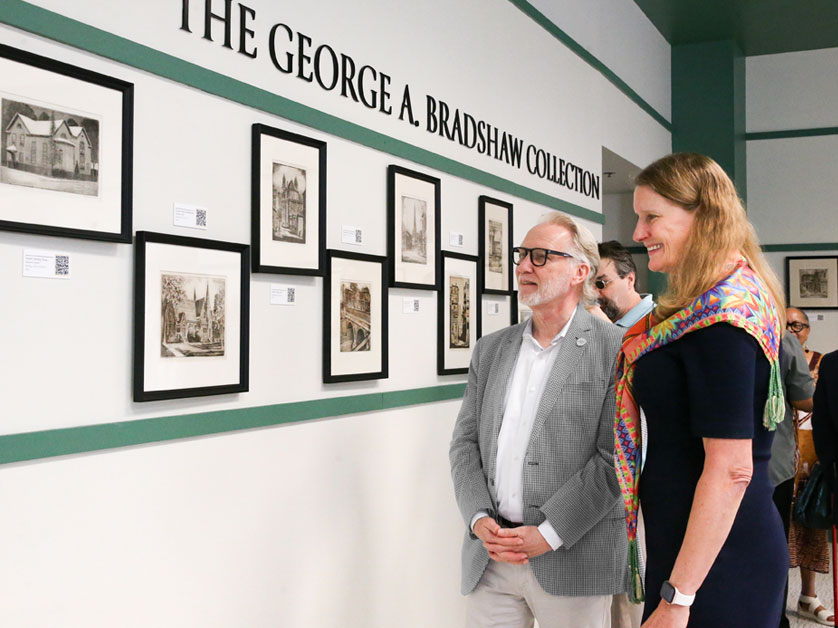
Thomas Edison State University (TESU) today celebrated the relocation of the George A. Bradshaw Collection to a newly renovated space within the historic Kelsey Building.
TESU President Merodie A. Hancock, Ph.D., was joined by members of the University’s Board of Trustees and University leaders for the unveiling of the collection’s new home.
“Bradshaw’s work allows us to see Trenton through the eyes of someone who deeply appreciated its history and character,” Hancock said. “His etchings connect us to the people, places and industries that built this community.”
The George A. Bradshaw Collection offers a remarkable visual record of Trenton’s past. The collection consists of 64 etchings created by renowned artist George A. Bradshaw, whose work documented the buildings, streets, industries and landmarks that helped shape the city. The collection was donated to the University in 1986 by Raymond L. Steen, retired president of the Broad Street National Bank, in memory of his wife, Mary McPherson Steen.
Through his artwork, Bradshaw preserved images of places and scenes that might otherwise have been lost to history. His etchings provide a unique glimpse into Trenton’s evolution and reflect a deep appreciation for the city’s character and heritage.
The collection’s new location in the Kelsey Building is particularly fitting. The building itself is an important part of Trenton’s story and once housed the School for the Industrial Arts where Bradshaw taught and stands as a symbol of the University’s commitment to preserving the city’s architectural heritage.
The newly designed space provides an enhanced environment for displaying and protecting the collection. Each piece of art now includes a unique QR code so that visitors can scan the code to learn additional details about each etching as well as new web pages on the University site.
The George A. Bradshaw Collection is available for viewing by visitors to the Kelsey Building and remains an important educational and cultural resource for the University and the greater Trenton community.